
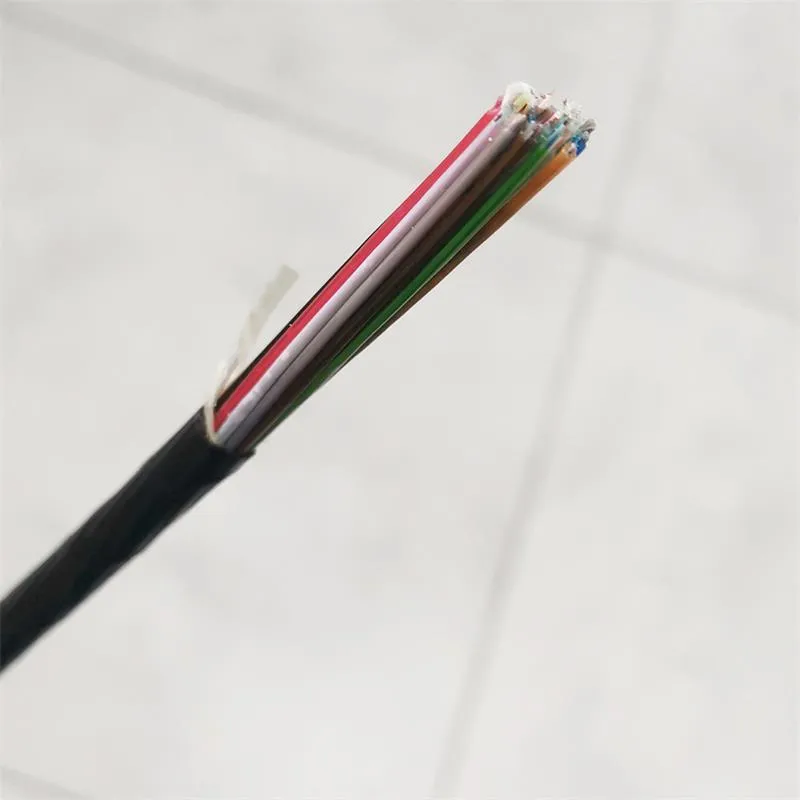
Air-blown microcable: the invisible blood vessels of urban underground communication networks and the flexible foundation of a smart future
Air-blown microcable: the invisible blood vessels of urban underground communication networks and the flexible foundation of a smart future
Published: 2025-06-27
What Is Air-Blown Microcable Technology?
Air-blown microcable technology represents a paradigm shift in how fiber optic networks are deployed underground. Instead of pulling pre-terminated fiber cables through buried conduits — a process limited by pulling tension and bend radius — air-blown fiber separates infrastructure installation from capacity deployment.
The two-phase model:
- Phase 1: Install microducts — Small, lightweight HDPE tubes are placed underground once, providing permanent pathways
- Phase 2: Blow fiber when needed — Lightweight microcables are propelled through the ducts using compressed air, installed on demand
This decoupling is the technology’s defining advantage: the civil works disruption happens once, and the network can be upgraded, expanded, or reconfigured indefinitely without ever digging again.
Microcable Types: A Reference Guide
| Cable Type | Construction | Fiber Count | Best For | Max Blow Distance |
|---|---|---|---|---|
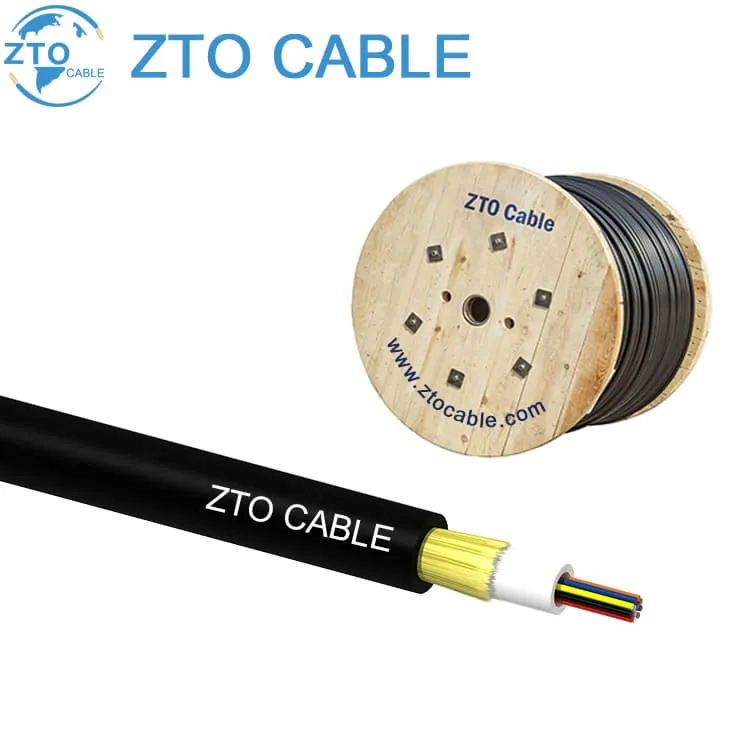
| GCYFXTY (Uni-tube) | Single loose tube, smooth PE jacket | 2-24 | Drop, distribution | 1000-1500m |
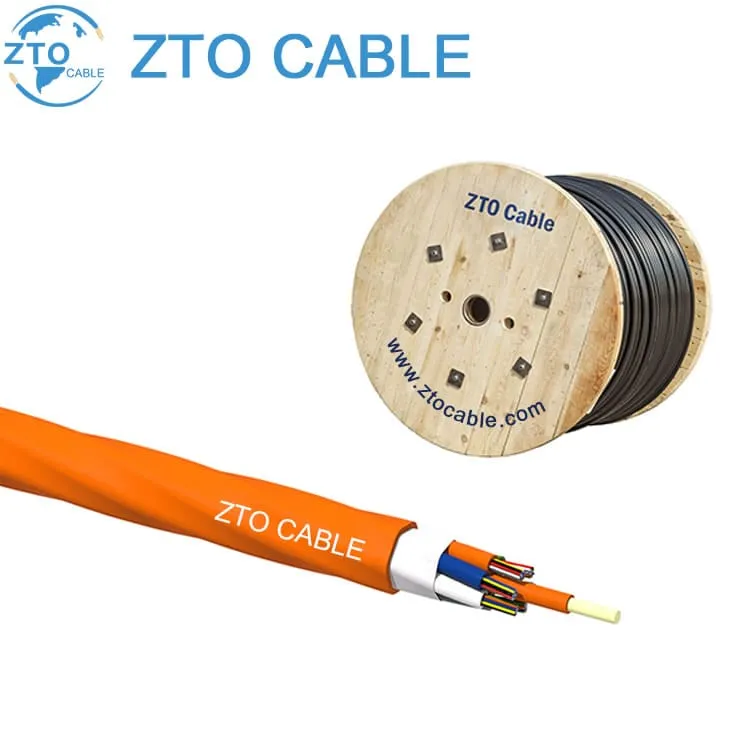
| GCYFY (Stranded) | Multiple tubes around FRP core | 12-288 | Feeder, backbone | 800-1200m |
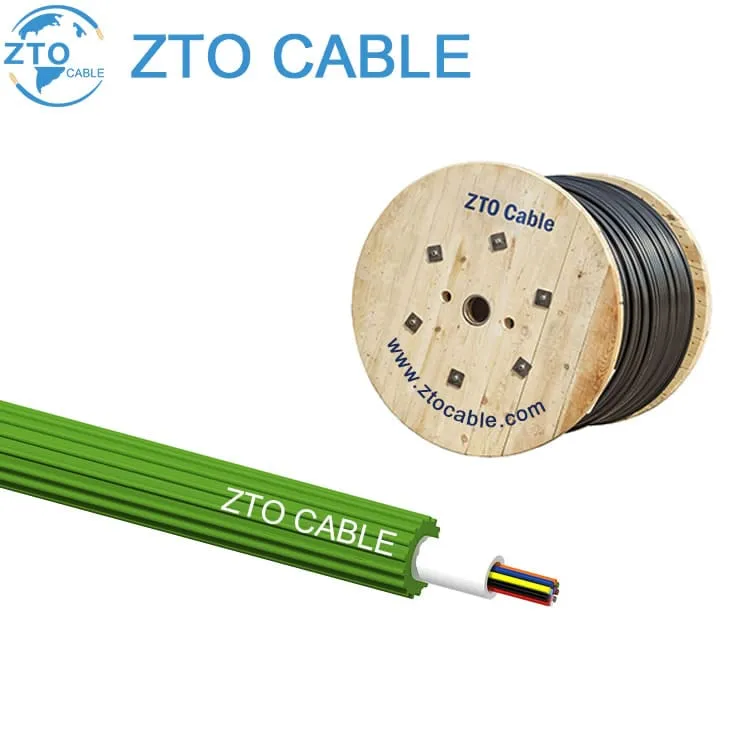
| EPFU (Ribbed) | Uni-tube with ribbed low-friction jacket | 2-12 | Challenging routes, long blows | 1500-2000m |
Installation Methods for Microducts
The microduct infrastructure can be placed using several techniques, each suited to different urban environments:
Micro-Trenching
A narrow cut (2-5cm wide, 15-30cm deep) is made in the road or sidewalk surface, microducts are laid in, and the slot is immediately backfilled. Cost: $15-40 per meter. Speed: 200-500 meters per day. Minimal traffic disruption.
Horizontal Directional Drilling (HDD)
An underground borehole is drilled between access pits, and microduct bundles are pulled through. Zero surface disruption. Cost: $30-80 per meter. Best for crossing under roads, railways, and rivers without any excavation.
Sub-Ducting in Existing Conduits
Where existing larger conduits (40-100mm) are available, microduct bundles (typically 2-7 tubes) are pulled through as a single unit. This is the cheapest method ($5-15/m) and leverages previous infrastructure investment.
The Blowing Process: How Cable Blowing Works
Cable blowing uses a specialized machine combining two forces:
- Compressed air (10-15 bar) creates an air cushion that centers the cable in the duct, virtually eliminating friction between the cable jacket and duct wall
- Mechanical pushing provides forward force at the insertion point, with caterpillar drive belts gripping the cable
The result: the microcable “floats” through the duct on a bed of compressed air, experiencing near-zero mechanical stress on the fibers. This allows installation distances up to 2000m in a single operation — 3-5x longer than traditional cable pulling.
The Killer Feature: Future-Proofing Without Digging
The most compelling long-term advantage of air-blown fiber is what happens 5-10 years later when capacity needs change:
With traditional cable: Re-trench and start over — 60-80% of original cost With air-blown: Blow out old cable in 5-15 minutes, blow in new higher-fiber-count cable in 10-30 minutes — 5-15% of trench cost, zero surface disruption
Over a 20-year network lifecycle, this “install once, upgrade forever” capability reduces total cost of ownership by 40-60%.
Standards and Specifications
ZTOFC air-blown microcables are manufactured to:
- IEC 60794-1-1 — Generic specification for optical fibre cables
- IEC 60794-5-10 — Family specification for microduct optical fibre cables for use by blowing
- ITU-T G.652.D / G.657 — Single-mode optical fibre specifications
- EN 187105 — European standard for single-mode optical fibre cable for blown installation
Related Products
Frequently Asked Questions
1. What is air-blown microcable technology?
Air-blown fiber technology is a two-phase underground deployment method: (1) Microducts — small-diameter HDPE tubes (7-16mm OD) — are installed underground using micro-trenching, directional drilling, or sub-ducting in existing conduits. (2) When fiber is needed, a lightweight microcable is blown through the duct using high-pressure compressed air. The air both propels and centers the cable, enabling 1000-2000m installations in a single operation with zero tensile stress on the fibers.
2. What are the main types of air-blown microcable?
Three main constructions: GCYFXTY (Uni-tube) — single loose tube with up to 24 fibers, ideal for drop and distribution segments; GCYFY (Stranded) — multiple tubes stranded around FRP strength member, up to 288 fibers for feeder and backbone routes; EPFU (Enhanced Performance Fiber Unit) — low-friction green ribbed jacket for maximum blowing distance, up to 12 fibers per tube for challenging routes.
3. How does air-blown fiber compare to traditional trenching?
Air-blown fiber reduces installation cost by 50-80% ($15-40/m vs $50-200/m for traditional trenching), installs 2-4x faster (200-500m/day vs 50-100m/day), and the microducts remain in place for future upgrades — new cables can be blown in without any digging, reducing lifecycle TCO by 40-60% over 20 years.
4. How far can a microcable be blown in a single operation?
Standard blowing distances are 1000-2000m per operation using a cable blowing machine at 10-15 bar air pressure. For longer routes, cascaded blowing (intermediate blowing units placed along the route) can extend reach to 3000m+. EPFU cables with ribbed low-friction jackets typically achieve 20-30% longer blowing distances than smooth-jacket cables.